
Last updated October 16, 2026
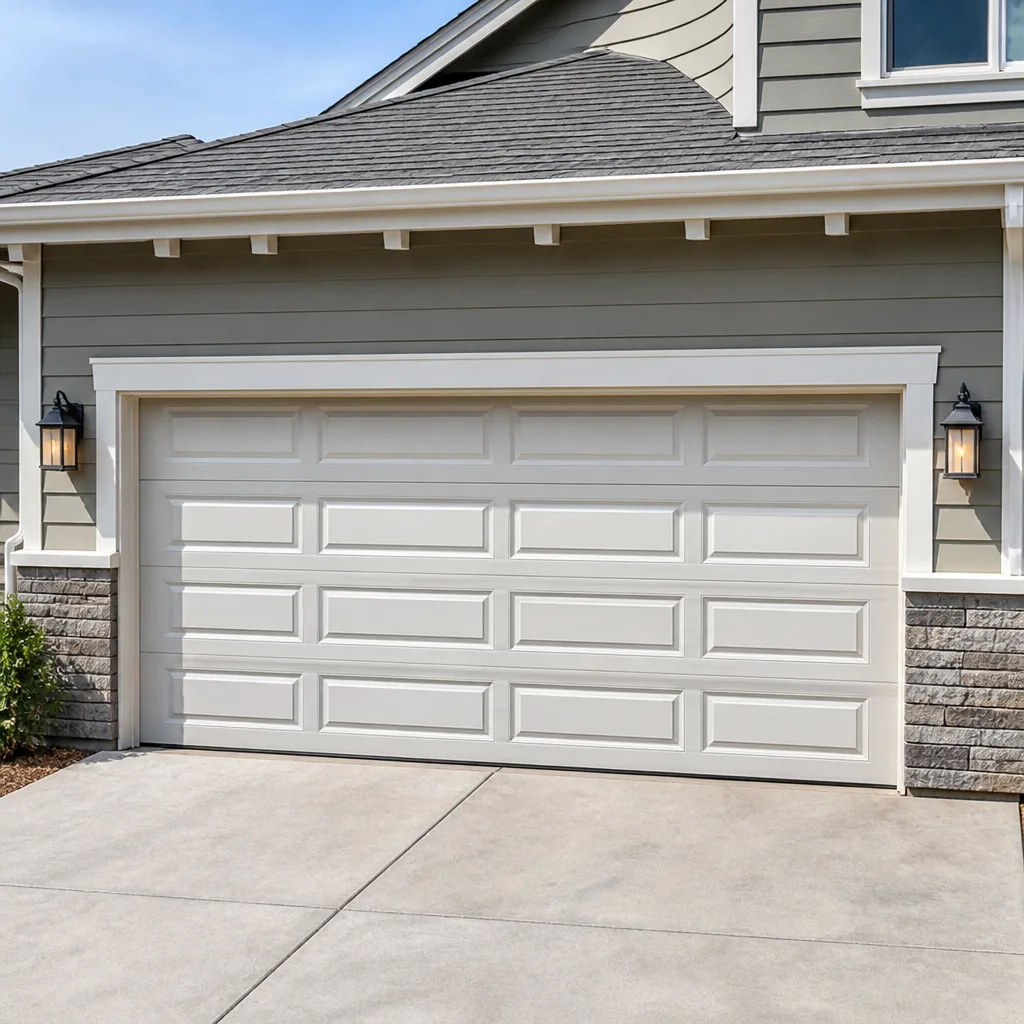 Raised-panel steel
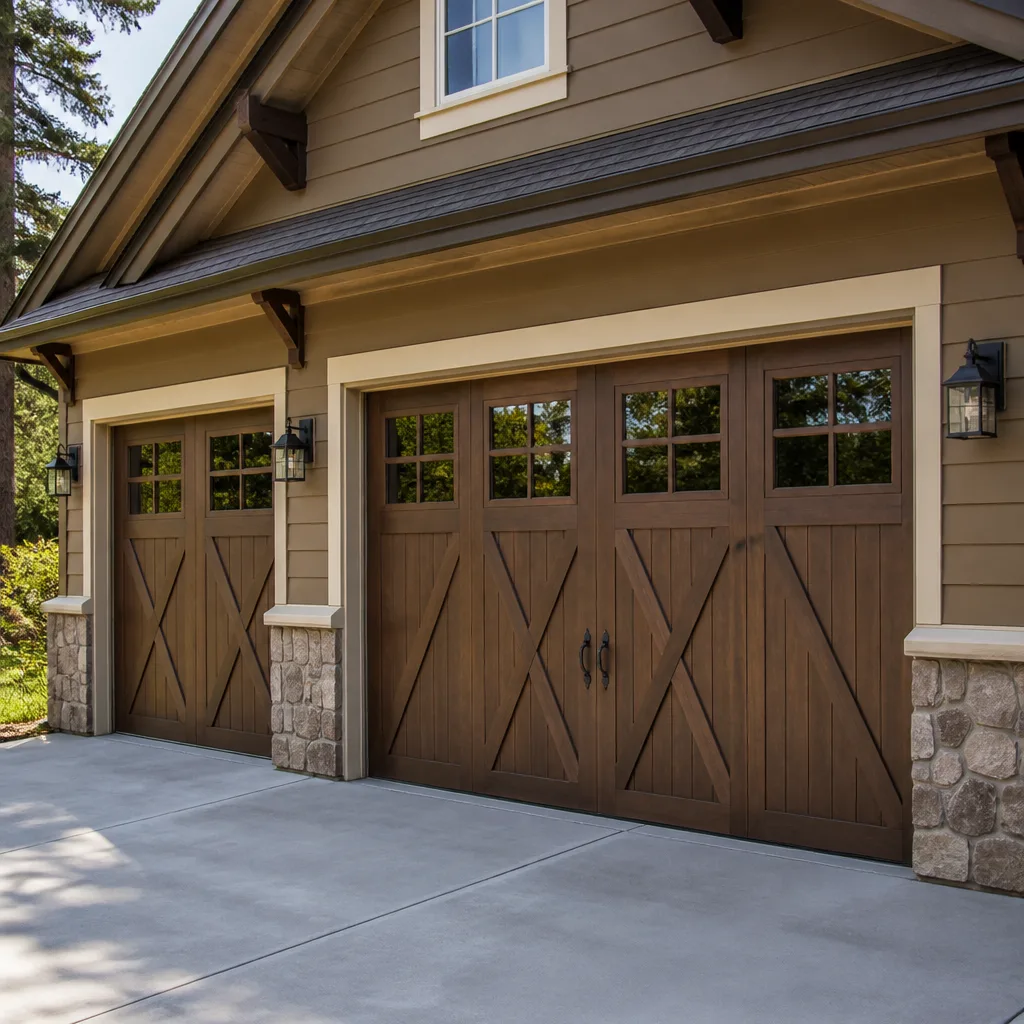 Carriage house
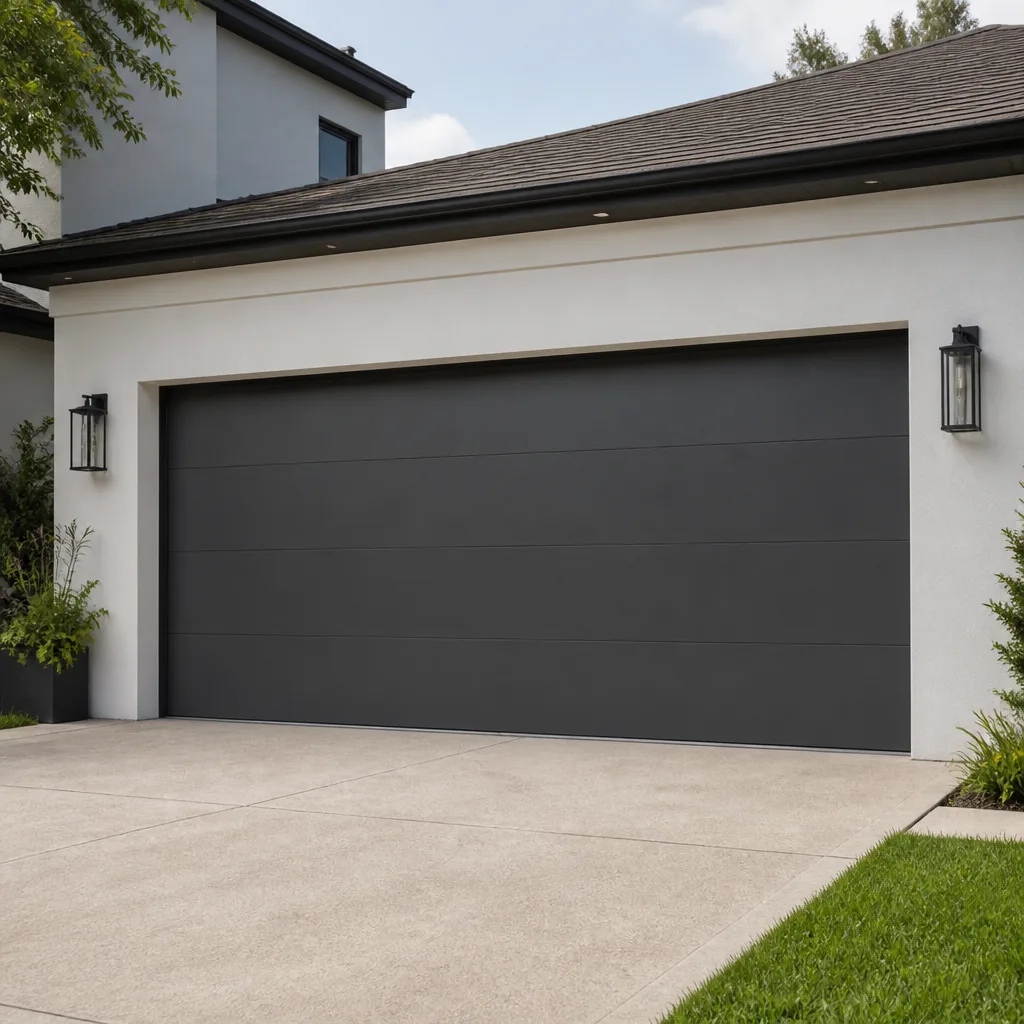 Modern flush
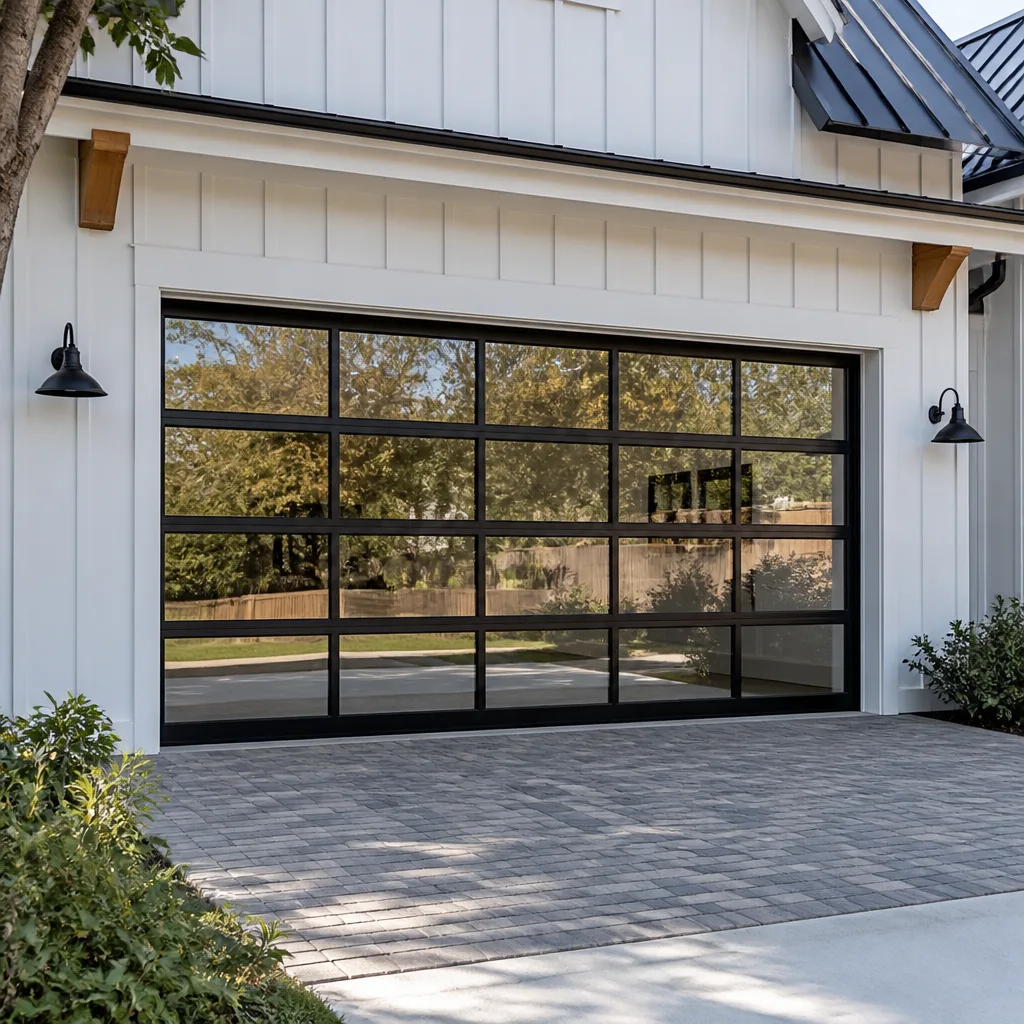 Full-view glass
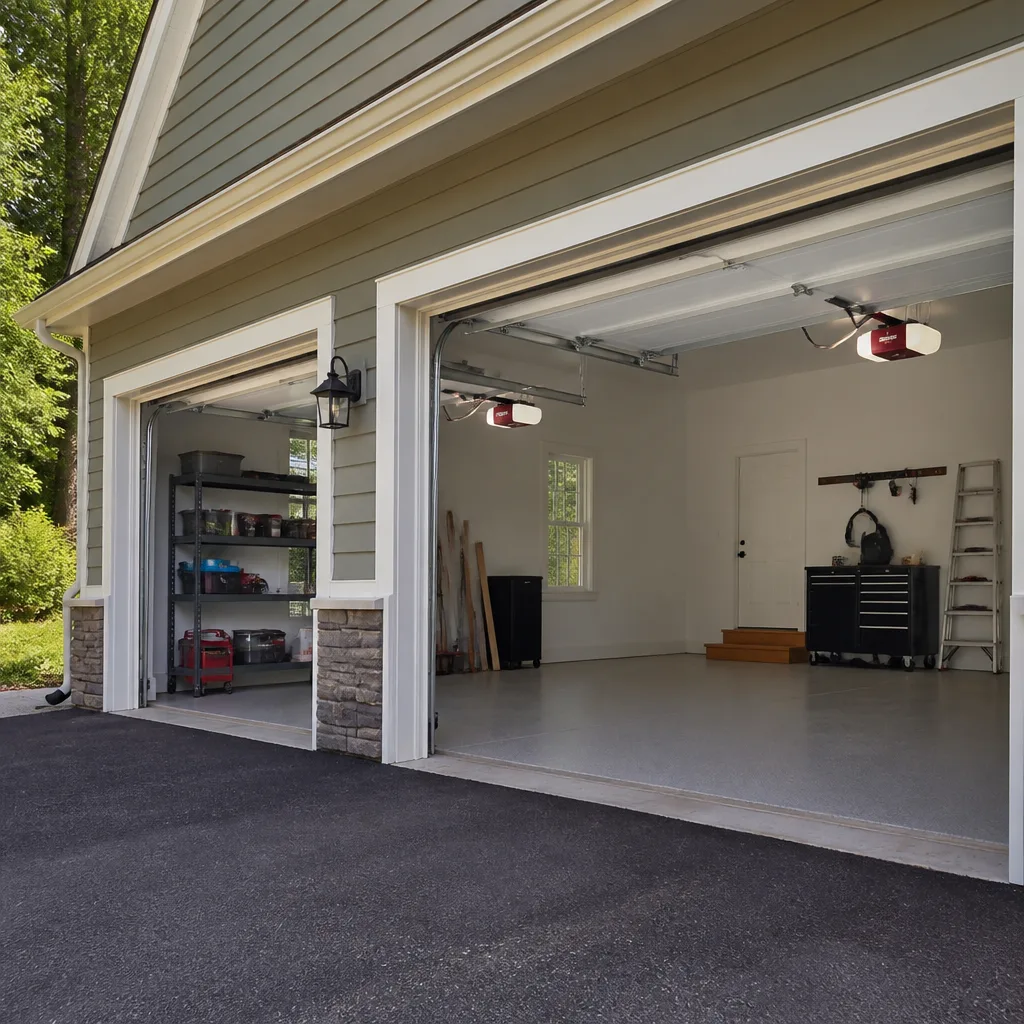 LiftMaster openers
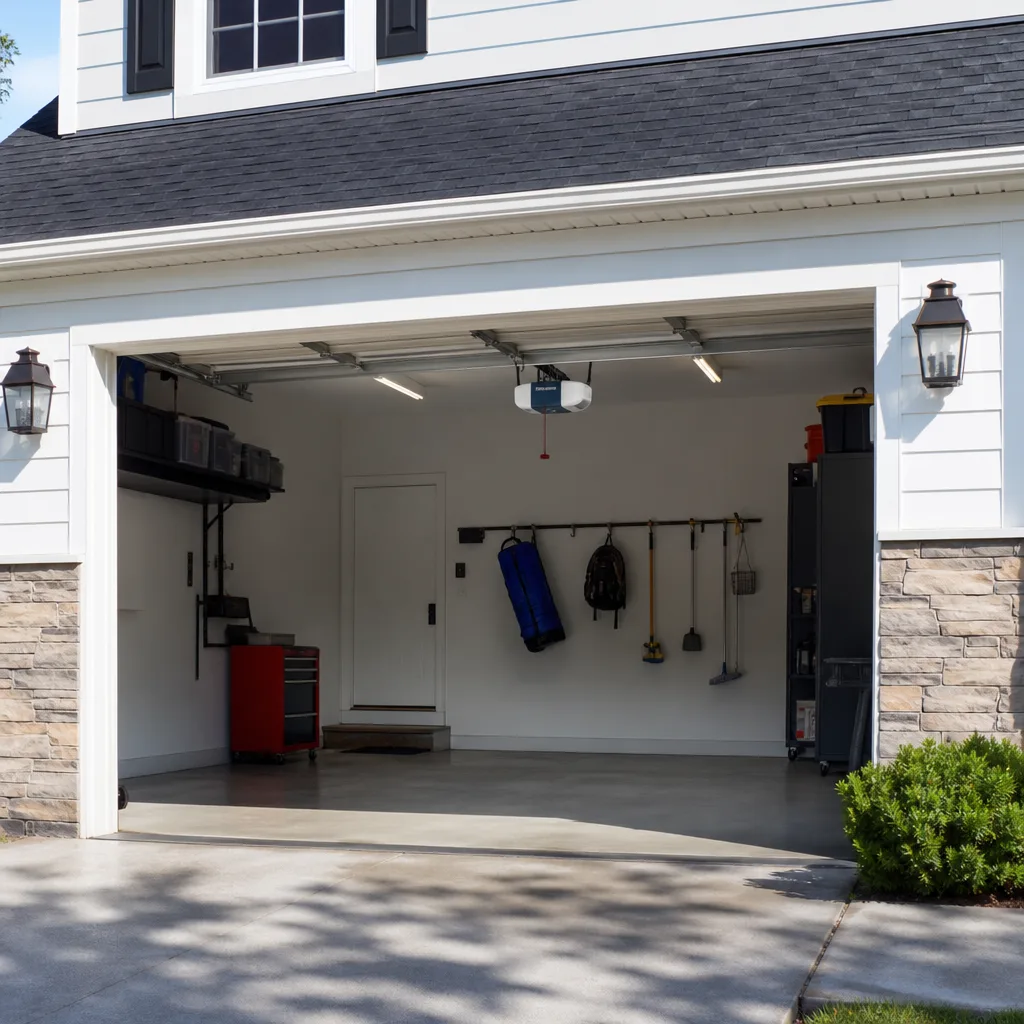 Chamberlain openers
Full 25-point door and opener safety check with every visit - springs, cables, rollers, tracks, and your LiftMaster or Chamberlain opener included
You get a price before we start. It does not change when the truck arrives.
Get your free estimateGarage Door Warning Signs: A Austin Homeowner’s Reference Guide
A grinding noise on the way down and a grinding noise on the way up are caused by two completely different components. Conflating them is how Austin homeowners end up paying to replace the wrong part. This guide maps exact sounds, movements, and visual cues to the specific component that’s failing, so when you call for Garage Door Repair in Austin, you can describe the problem in terms a technician recognizes instantly. We’ve written this from hundreds of service calls across Austin, from Tarrytown to Round Rock, and the patterns repeat house to house.
Styles & brands we work with
Quick Answer
Most garage door warning signs fall into four categories: sound (grinding, clunking, squealing), movement (hesitation, uneven travel, reversal), visual (rust, fraying, sagging), and operational (wall switch behavior, remote inconsistency). A door that makes a metal-on-metal scrape during travel usually points to track or roller issues, while a rhythmic clunk at the bottom of the cycle typically means a spring or cable problem. Any sudden change in how the door sounds or moves means a component is degrading, and catching it early keeps a $80 roller replacement from becoming a $600 opener rebuild.
Table of Contents
- The Symptom-to-Component Diagnostic Table
- Sounds That Mean Something: Exact Descriptions and What They Point To
- Visual Warning Signs Specific to Austin Homes
- The Door Balance Test Every Austin Homeowner Should Run Twice a Year
- Monitor-and-Wait vs. Stop-Using-the-Door-Now
- How to Document Warning Signs in a Short Video Before Calling
- Common Mistakes to Avoid
- When to Call a Professional
- Frequently Asked Questions
- The Bottom Line
The Symptom-to-Component Diagnostic Table
This table is the core of this guide. It matches what you hear, see, and feel to the part that’s actually failing. Use it before you call anyone, so the phone conversation starts with useful information instead of “it’s making a weird noise.”
| Symptom | Exact Description | Likely Component | Rough Repair Cost in Austin |
|---|---|---|---|
| Metal-on-metal scrape, entire travel | Continuous, like a file dragged across steel, both directions. | Rollers or track alignment | $85 – $180 |
| Metal-on-metal scrape, only near the top | Scrape happens only as door reaches the horizontal track section. | Track bend or worn top roller | $95 – $190 |
| Rhythmic clunk at the bottom of the cycle | One to three distinct thuds as the door settles into the closed position. | Cable drum or spring seating | $150 – $280 |
| High-pitched squeal that changes pitch as door moves | Sounds like a slipping belt, not a grind. | Dry or failing roller bearings | $80 – $160 |
| Door shudders side to side during travel | Visible lateral movement, worse in the middle of the opening. | Worn hinge or loose track bolts | $75 – $150 |
| Door drops hard in the final few inches | Door accelerates near the floor, lands with a bang. | Failing torsion spring | $150 – $280, do not delay this one |
| Opener runs but door does not move | Motor hums, trolley doesn’t engage or moves without the door. | Trolley carriage or emergency release | $110 – $220 |
Note: prices reflect typical parts and labor from a Austin garage door company and assume a single-family residential door. We quote the exact number before any work starts, in writing, so the figure on the invoice matches the figure you approved, as explained in our How to Hire a Garage Door Contractor in Austin: A Step-by-Step Guide.
Sounds That Mean Something: Exact Descriptions and What They Point To
Sound is the earliest warning sign most doors give, and it is also the most commonly misdiagnosed by homeowners. Here is what each sound actually tells you.
The grind on the way up vs. the grind on the way down
A grinding noise on the way up is usually the trolley, the carriage that rides along the opener rail and pulls the door upward. The trolley teeth strip over years of use, and when they start slipping they produce a raspy grind that is worse under load. A grinding noise on the way down is often the track or rollers. The door’s weight is shifting from the vertical track to the horizontal track, and if the horizontal section is slightly out of alignment, the rollers scrub metal on metal. Same word, “grind,” two entirely different repairs. The trolley fix runs $110 – $220. The track realignment runs $85 – $180. If a technician quotes one without confirming which direction the noise happens, that’s a signal to keep looking.
The clunk you hear when the door lands
A single distinct clunk as the door hits the closed position often comes from the cable drum. The cable drum is the grooved wheel at the top of each side track that the lifting cable wraps around. If the cable has developed a little slack, or if the drum has shifted on the torsion tube, the cables do not stay seated. The door lands slightly uneven and you hear the clunk as the cable snaps taut at the last moment. This is not an emergency by itself, but it means the system is carrying unequal tension, and that adds wear to the spring.
The squeal that gets worse in the cold
Roller bearings are sealed metal or nylon wheels. When the seal fails, the bearing runs dry and squeals. In Austin’s winter mornings, when the garage is cold and the grease is thicker, the squeal is louder. You can localize it by standing inside the garage and listening as the door travels. If the squeal moves with the door, it’s a roller. If it stays at the same height, it’s likely the spring or cable pulley. Roller replacement is one of the cheaper repairs we do, but ignoring it lets the bearing seize, and then the roller skids instead of rolls, which carves a groove into the track.
Visual Warning Signs Specific to Austin Homes
Austin’s climate creates specific failure patterns you’ll see before you hear anything. Here’s what to look for when you put eyes on your door once a month.
Rust patterns on torsion springs
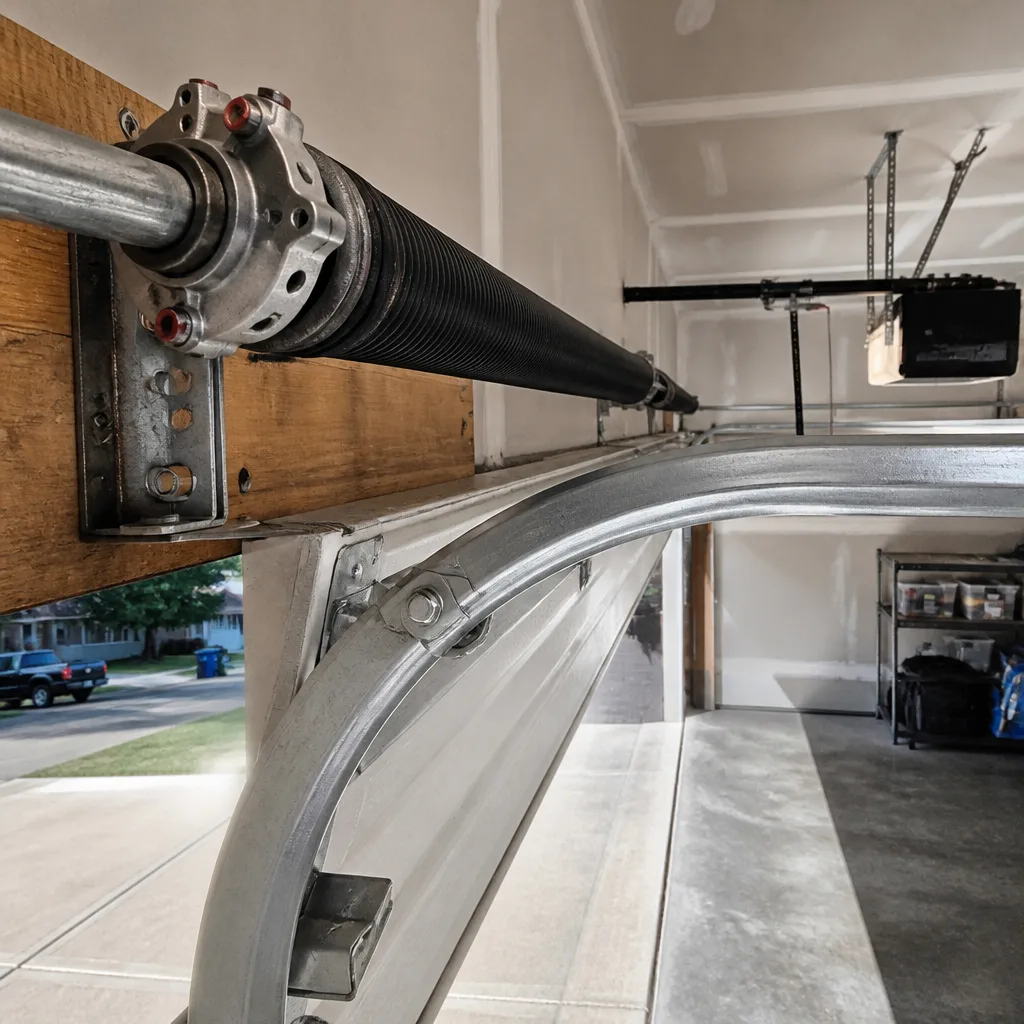
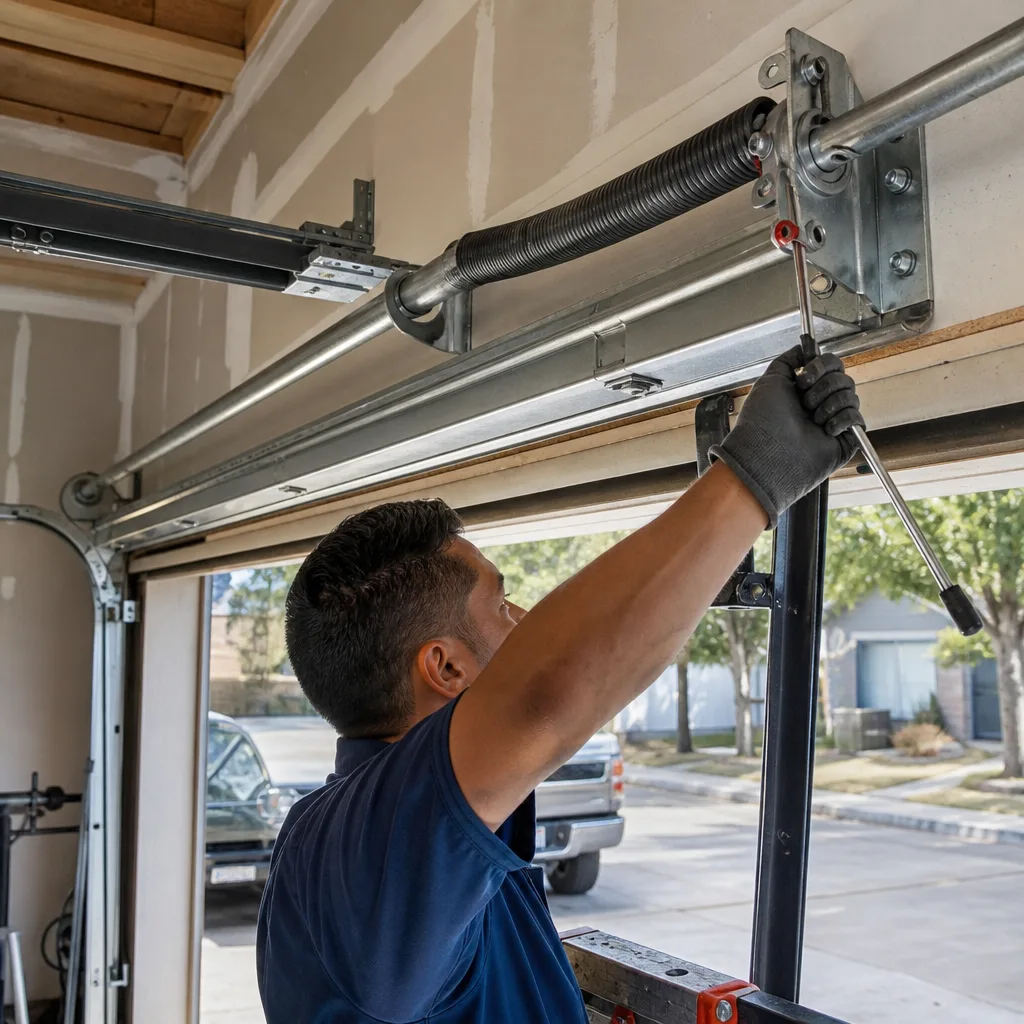
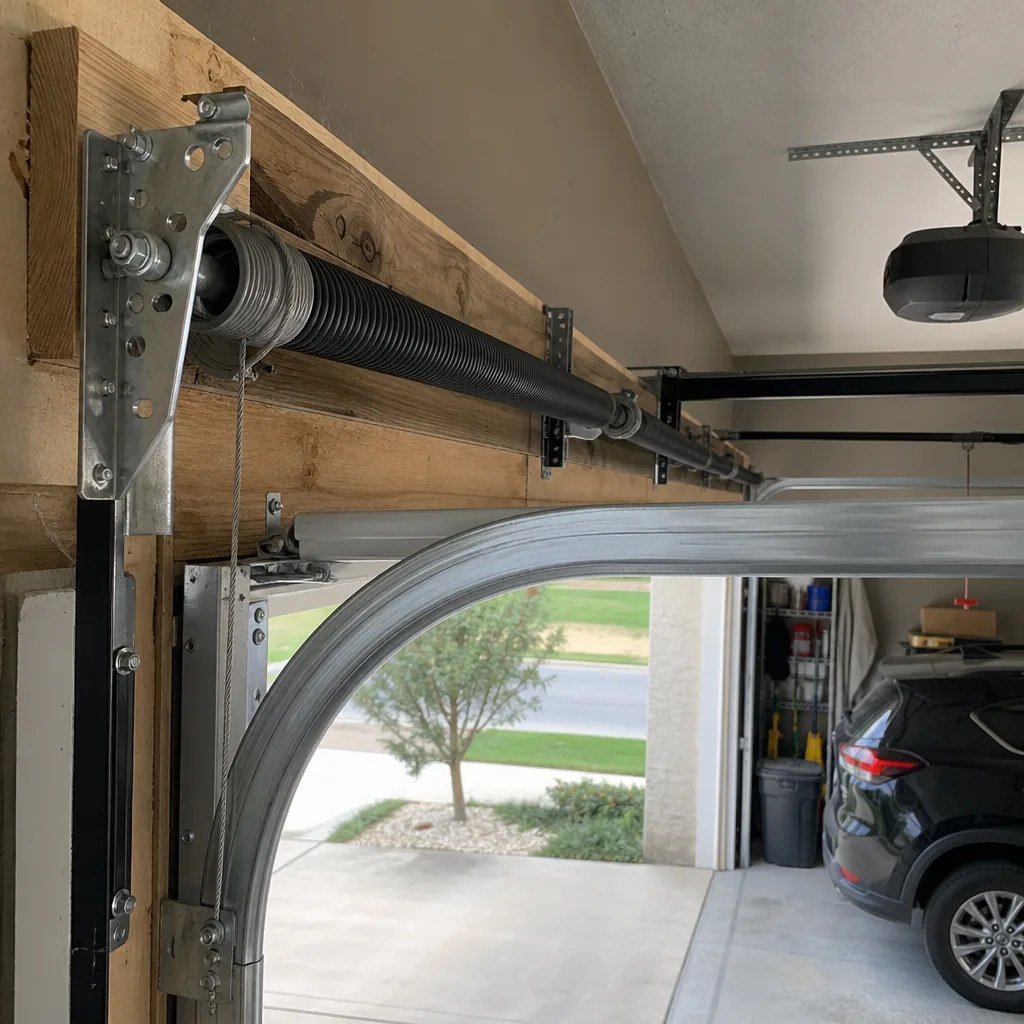
The torsion spring is the heavy coil mounted horizontally above the door opening. It carries most of the door’s lifting weight and stores enormous energy when the door is closed. In Austin, the humidity cycle does something predictable to springs: condensation from humid spring nights followed by dry summer heat creates surface rust that appears first at the ends of the spring, near the winding cones. Surface rust on a spring that’s less than five years old is cosmetic. Rust that flakes, or rust accompanied by a visible gap in the coil, means the spring is nearing failure. When a torsion spring snaps, it releases its energy all at once, and the bang is loud enough to be mistaken for a car crash in the driveway. If you see a visible gap in the coil, stop using the door and call for service.
UV-cracked bottom weatherseal
The bottom weatherseal is the rubber strip running along the bottom edge of the door. It keeps water, leaves, dust, and the occasional scorpion out of the garage. Austin’s sun degrades the rubber at the outside corners first, because that’s where the door’s edge gets the most direct afternoon light. A weatherseal that’s cracked and brittle lets water under the door during a downpour, and Austin gets enough sudden downpours that a compromised seal means a wet garage floor at least a few times a year. Replacing a weatherseal runs about $60 – $120 and takes a technician less than half an hour. It’s not urgent, but it’s one of the cheapest preventive moves you can make.
Frayed cables and loose cable ends
The lifting cables are wire strands that ride the cable drums on each side. They carry the spring’s tension to the bottom of the door. On a well-maintained door, the cables sit snug in the drum and run straight down. On a Austin door that’s seen a few years without service, you’ll sometimes see a single strand of wire poking out of the cable, which means the others are taking extra load. A cable that snaps while the door is moving lets the door drop on one side, and that is a genuinely dangerous failure. If you see any fraying, stop using the door and call for service.
The Door Balance Test Every Austin Homeowner Should Run Twice a Year
This is the single most useful routine diagnostic you can run on a garage door, and it takes under two minutes. Here’s the procedure, step by step.
- Close the door completely.
- Pull the emergency release handle, the red cord hanging from the opener rail. This disconnects the door from the opener trolley so you’re testing the door alone.
- Lift the door manually to waist height, about the midpoint of the opening, and let go.
- Watch what happens. A properly balanced door stays exactly where you left it. It should not drift up, and it should not drift down.
- Reconnect the trolley by pulling the release cord toward the door and running the opener until it re-engages.
If the door drifts up, the spring is carrying too much tension. If the door drifts down, the spring is carrying too little, which usually means it’s stretched and losing strength. Both conditions make the opener work harder than it was designed to, and that shortens the opener’s life. Run this test in spring and again in fall. Austin’s temperature swings between summer and winter shift the metal components enough that a door balanced in July may not be balanced in January. If the door drops when you release it, the spring is well into its service life and should be replaced soon. Most torsion-spring replacements run $150 – $280, parts and labor included, and we replace springs with the correct wire gauge and inside diameter for your specific door weight, not a one-size-fits-all part.
Monitor-and-Wait vs. Stop-Using-the-Door-Now
Not every warning sign is an emergency. Here’s the line we draw between issues you can watch and issues that mean the door should stay shut until a technician arrives.
Monitor and wait (inconvenience, not danger)
- Slow operation in one direction only: Usually a travel-limit setting or a worn roller, not an immediate safety issue.
- Occasional squeal, no visible wear: Dry rollers make noise before they fail. Plan for a service call in the next few weeks.
- Weatherseal cracking at the corners: Water intrusion risk, not a structural risk.
- Light surface rust on springs: Cosmetic until it flakes or a gap appears.
- Remote works intermittently: Usually the remote battery or a receiver antenna angle.
Stop using the door now
- Visible gap in the torsion spring coil: Spring is about to snap. Door is carrying unbalanced load.
- Frayed lifting cable: Cable can part under tension and the door can drop.
- Door drops hard in the final inches: Tension loss, will only get worse.
- Door slams shut when released from the opener: Complete spring failure, the door is dead weight.
- Door moves unevenly, one side higher than the other: Cable drum or track issue that can damage the entire panel system.
When in doubt, err toward stopping. A door that can be run again later costs a service call. A door that fails while someone’s hand is under it costs far more.
How to Document Warning Signs in a Short Video Before Calling
Here’s a practical step that most homeowners in Austin skip, and it directly affects whether your phone quote is accurate. Before you call, shoot a 20-to-30 second video of the door doing the thing that concerns you. Here’s how.
- Stand inside the garage, phone horizontal, door visible from top to bottom.
- Press the wall button and hold the phone steady while the door completes one full cycle. Do not narrate. The technician needs to hear the sound, not your voice.
- Get a second close-up shot of any visual warning sign: the rusted spring, the frayed cable, the cracked seal.
- Text or email the video to the company before you call, or have it ready to describe.
Why this works: a technician who can hear the exact grind and see the spring is quoting a repair, not a guess. A homeowner who says “it’s noisy” gets a broad price range. A homeowner who sends a clip of the rhythmic clunk at the bottom of the cycle gets a quote for the cable drum adjustment. The video also protects you on price. When we give a written price, it’s based on what the video shows and what the technician confirms on site, before any work starts. If the technician finds additional issues, those are quoted and approved separately. Nothing on the invoice is ever a surprise.
Common Mistakes to Avoid
- Lubricating a failing part to quiet the noise. Spraying WD-40 on a worn roller quiets it for a week and hides the warning sign. By the time the noise returns, the roller has seized and the track is scored.
- Assuming the opener is the problem when the door is the problem. A door that’s out of balance makes the opener work harder. The opener fails because the door wore it out. Replacing the opener without fixing the door means buying another opener in a few years.
- Waiting until the spring snaps to call. A snapped spring is a risk and an emergency. A weakening spring shows you the warning signs for months, and the repair is the same price whether you catch it early or wait for failure.
- Testing the door balance with the opener still connected. You’re testing the opener’s holding force, not the door’s balance. Pull the release cord first, every time.
- Ignoring a door that reverses mid-cycle. A door that reverses is often just a misaligned safety sensor, but sometimes it’s the opener’s force limiter tripping because the door is binding. If you keep resetting it, you’re teaching the opener to force the door past the problem.
- Getting a quote over the phone and accepting it without a written price on site. Any legitimate Austin garage door company will confirm the price in writing at the door, before work begins. If the technician wants to start work before the number is on paper, that’s the wrong technician.
When to Call a Professional
Call when the door shows any stop-using sign: a visible spring gap, a frayed cable, or a door that drops hard at the bottom. Call when the balance test fails. Call when a noise changes character, even if it’s subtle, because that’s a component degrading, and components don’t self-heal. And call when you’re not sure whether something is a problem or normal aging, because a quick phone conversation costs nothing. Bramwell Garage Doors Austin offers free estimates in Austin, and the phone is answered by a live person around the clock. Call (325) 246-2936, describe what you’re hearing and seeing, and we’ll tell you whether it’s urgent or can wait. The price you hear is the price you approve, in writing, before any work starts.
Frequently Asked Questions
Most torsion-spring replacements in Austin run $150 – $280, parts and labor included. The exact price depends on the spring’s wire gauge, inside diameter, and length, which are matched to your door’s weight and size. Call (325) 246-2936 for a written quote before any work starts, and ask what the spring warranty covers and for how long.
A banging sound as the door lands usually means the door is dropping too fast in the final inches, which points to a torsion spring losing tension or a cable drum out of position. It’s not a normal noise, and it usually gets worse. The fix is often a spring adjustment or replacement, and in Austin that repair typically runs $150 – $280.
Once a year is right for most Austin homes. The humidity cycle and the summer heat put different stresses on the metal and rubber parts than a coastal or northern climate does. An annual check catches worn rollers, dry bearings, and a sagging door before they become breakdowns. Our technicians check every moving part and quote any needed repair before doing the work.
Not every noise is dangerous, but every noise means something. A squeal is a warning sign that a roller bearing is failing, and a scrape means metal is wearing on metal. The specific danger is a door that fails while someone is under it or a spring that snaps without warning. If the noise is new or getting worse, have it looked at.
We don’t recommend it. Torsion springs are under hundreds of pounds of tension, and the winding and unwinding procedure requires proper tools and training. A mistake can cause serious injury. This is a repair where the labor cost is money well spent. We quote the full price in writing before any work begins, so there’s no surprise at the end.
Not without your approval. Our procedure is to confirm the diagnosis, then present a written price for the exact repair before any work starts. If the technician finds additional issues, those are quoted separately and only proceed with your go-ahead. The number on the invoice matches the number you approved. That’s the rule on every job, without exception, across every Bramwell location.
The Bottom Line
A garage door talks to you for months before it fails. The warning signs are specific: a scrape on the way up is not the same as a scrape on the way down, a clunk at the bottom is not the same as a squeal in the track, and rust on a spring means something different in Austin than it does in Phoenix. Run the balance test twice a year. Shoot a video when something changes. Call a professional when the video shows a spring gap or a frayed cable, because those are not monitor-and-wait situations. And when you call, ask for the price in writing before work starts. If the company won’t put it on paper, call the next one. We’re Marcus Ellery and the team at Bramwell Garage Doors Austin, and we’ve been fixing Austin doors under the Kingswell standard since 2001. For Garage Door Installation in Austin, Garage Door Spring Repair in Austin, or any working-door warning sign, call (325) 246-2936. Free estimates, written quotes, no surprises.
Written by Marcus Ellery, Owner at Bramwell Garage Doors Austin, serving Austin since 2001.
See the difference
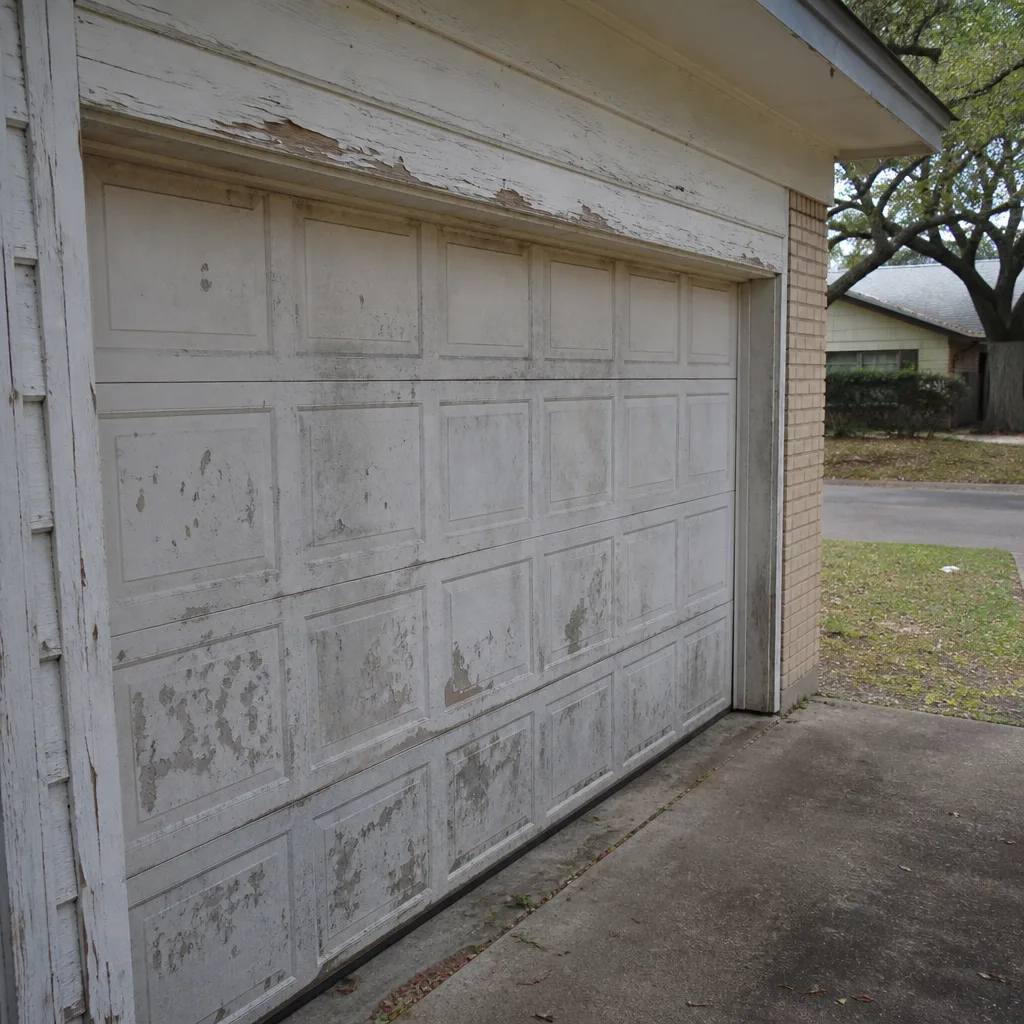 Before
 After
After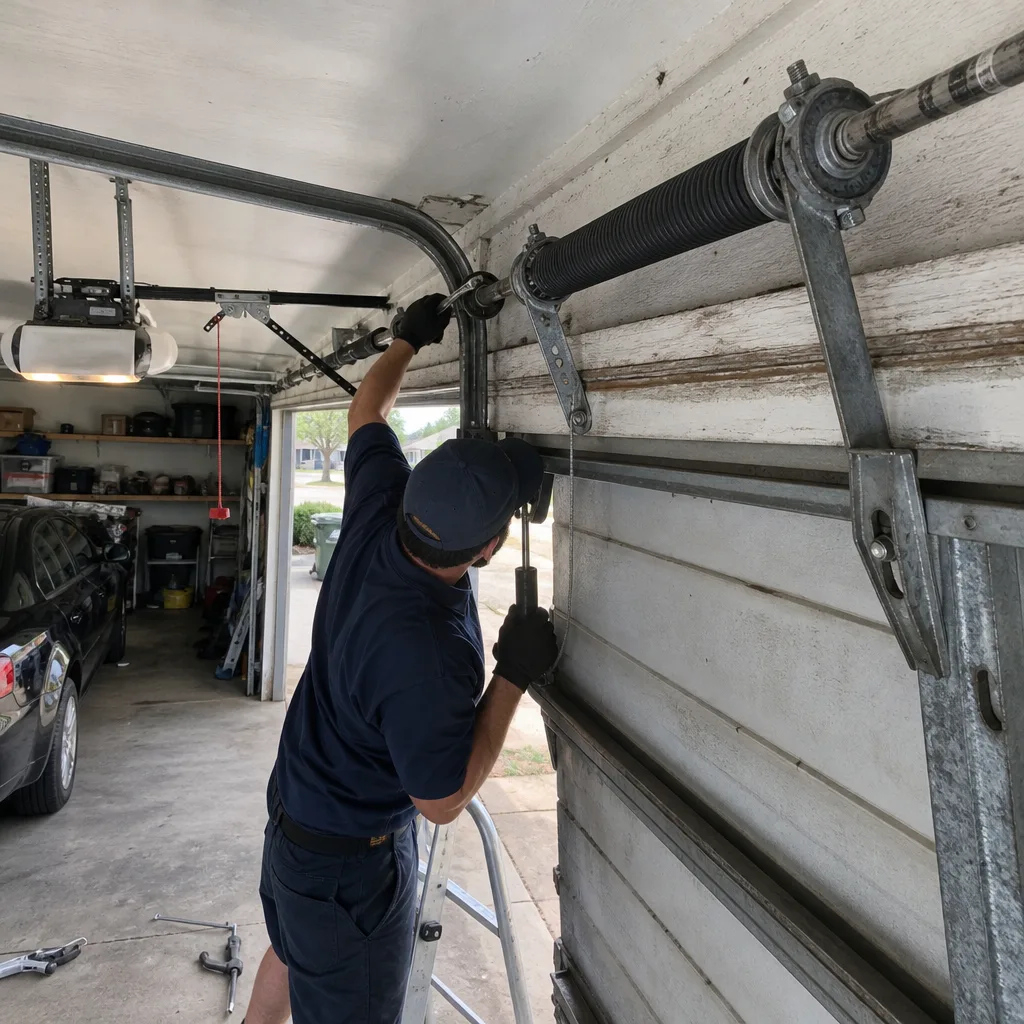 Before
 After
After Before
 After
After