
Last updated October 16, 2026
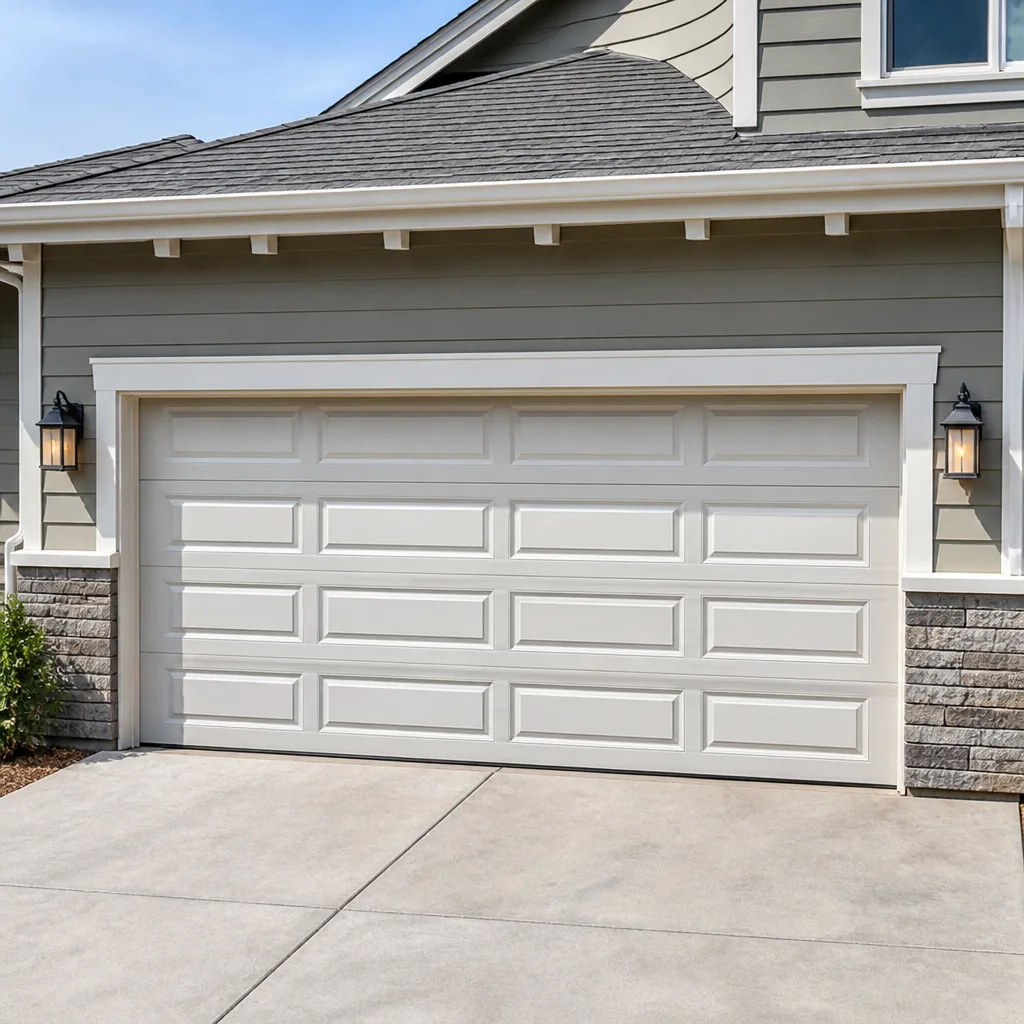 Raised-panel steel
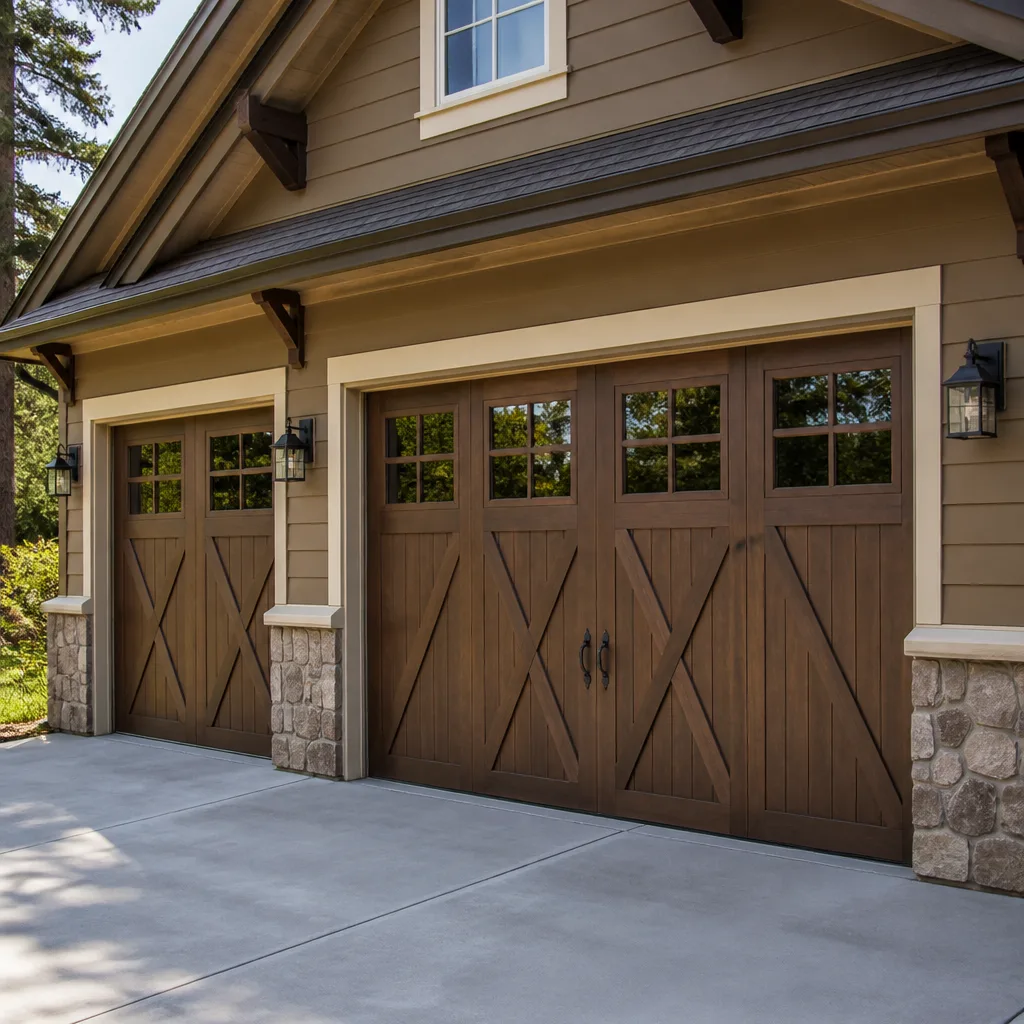 Carriage house
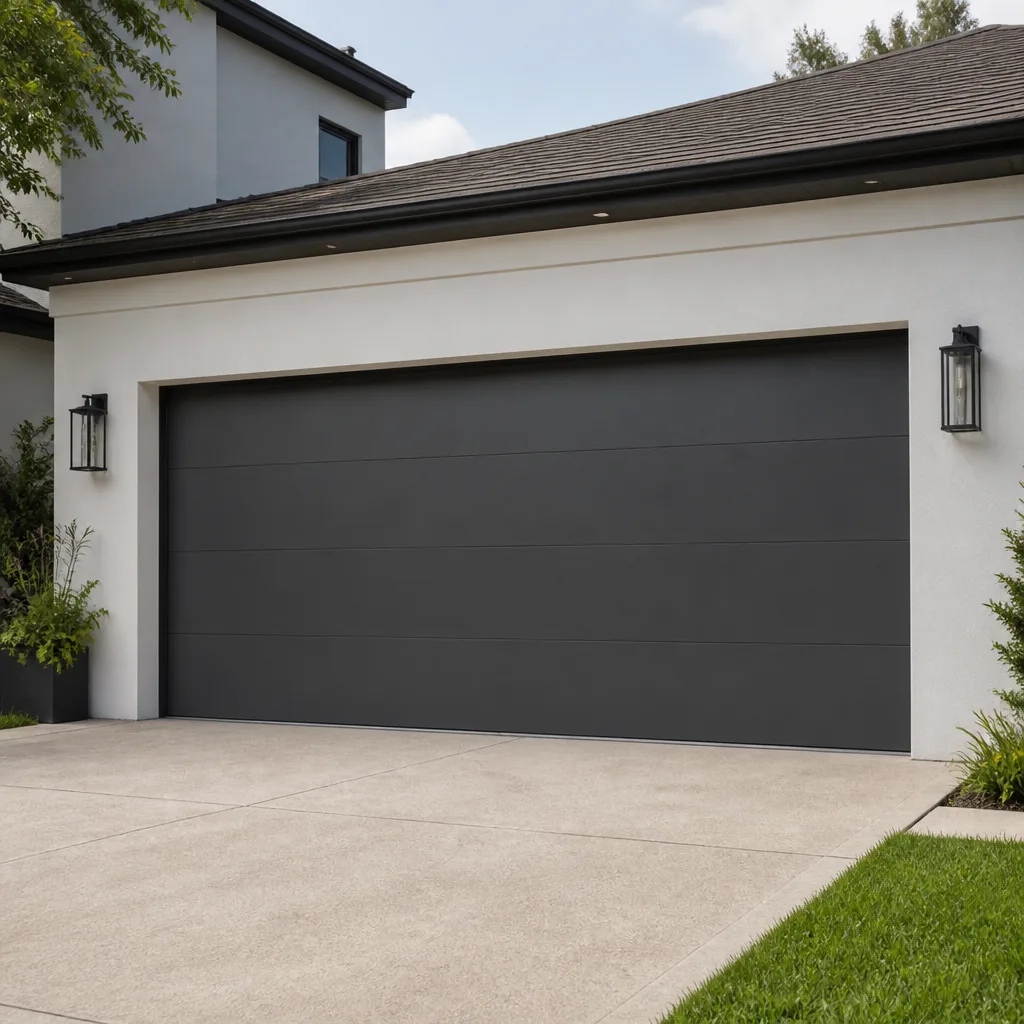 Modern flush
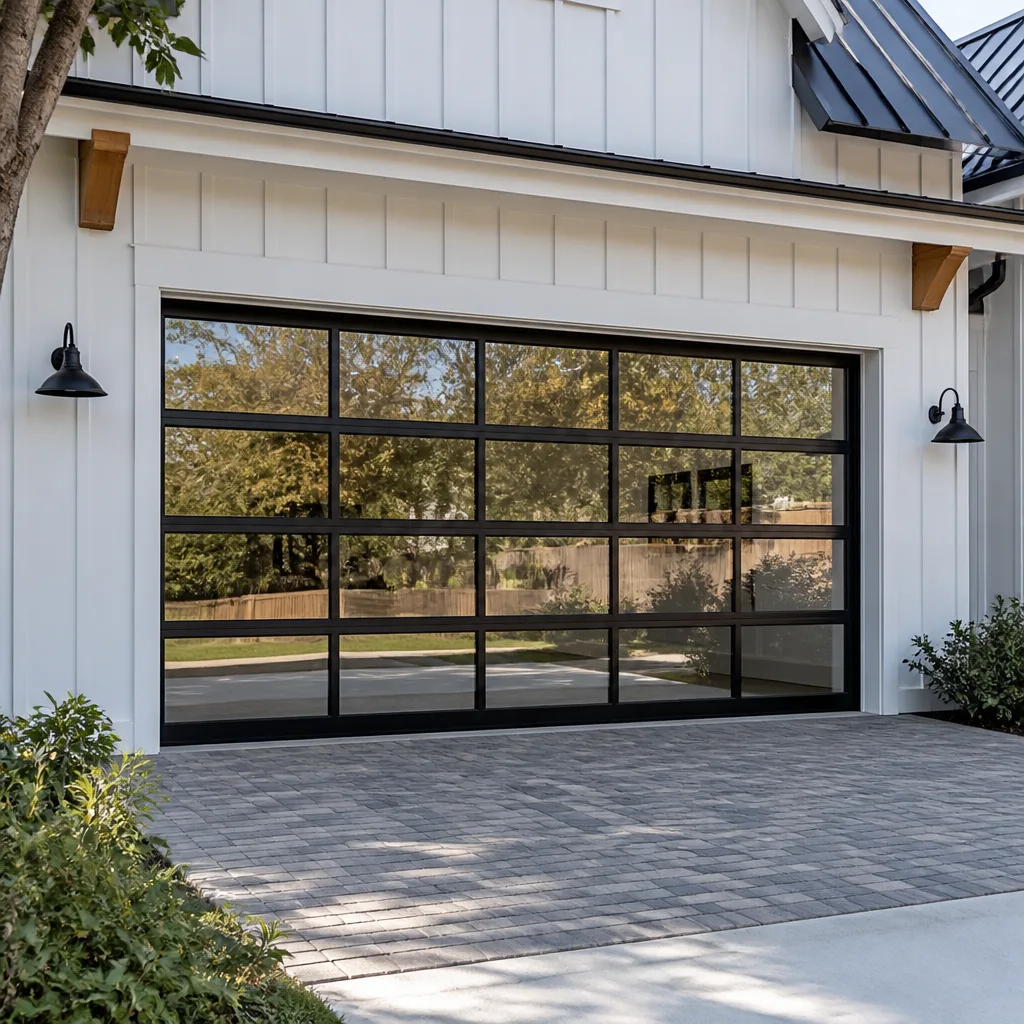 Full-view glass
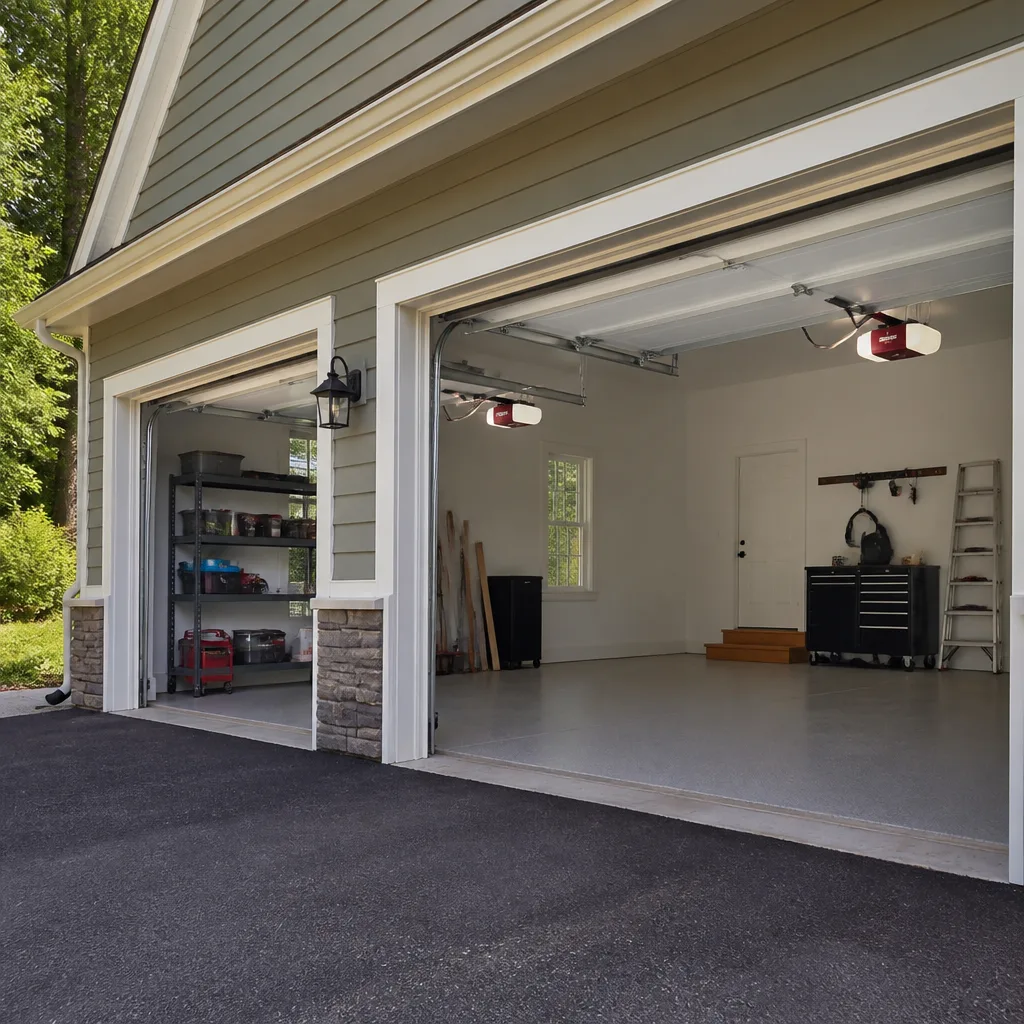 LiftMaster openers
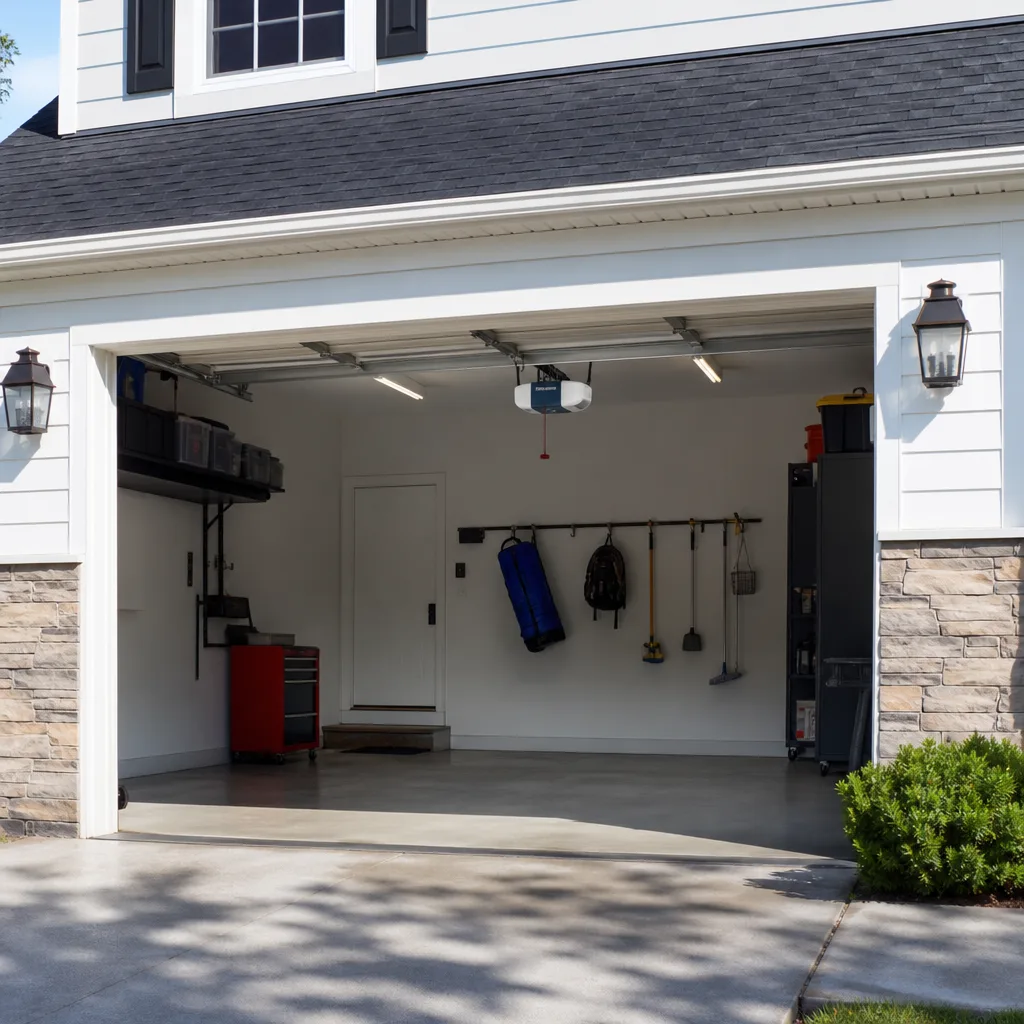 Chamberlain openers
Full 25-point door and opener safety check with every visit - springs, cables, rollers, tracks, and your LiftMaster or Chamberlain opener included
You get a price before we start. It does not change when the truck arrives.
Get your free estimateThe Complete Guide to Garage Door in Austin
Central Texas clay soil can shift a home’s foundation enough to pull a garage door track two inches out of square without a single storm moving through. Most Austin homeowners blame the opener, replace the motor, and watch the door jam again three weeks later. The opener was never the problem. This guide walks through how Austin’s specific conditions, the heat, the soil, the cedar-and-glass trend, change how garage doors are bought, repaired, and replaced, and points you to more guides & resources for ongoing maintenance. You’ll learn what is actually failing when a door binds, what a rebalance costs versus a panel swap versus a rail-up replacement, and what a written estimate should include before any technician sets a ladder against your wall.
Quick Answer
Choosing a garage door in Austin means matching the door’s construction to Central Texas heat, expansive clay soil, and foundation movement. Garage door repair in Austin typically starts with a service call that includes a written price before any work begins, covers the common failures (springs, tracks, openers, panels), and should end with a written guarantee on the parts and labor. A new, insulated steel door with installation usually falls between $1,200 and $3,400 depending on size, insulation level, and whether the tracks and motor are being reused.
Styles & brands we work with
Table of Contents
- How Austin Soil and Foundation Movement Affects Garage Doors
- Heat, UV, and the Hill Country Material Problem
- Panel Swap vs. Rebalance vs. Full Replacement
- How to Read a Kingswell Guarantee Price Sheet
- Austin Permit Thresholds for Garage Door Work
- Springs, Openers, and the Parts That Wear
- What a Repair Visit Should Look Like
How Austin Soil and Foundation Movement Affects Garage Doors
Austin sits on two soil types that do not stay put. The east side and much of the central corridor rest on Blackland Prairie clays, sometimes called Austin black clay or Houston Black. These clays swell when wet and shrink when dry. A single summer of drought followed by a wet October can lift a slab edge by an inch or more. West of MoPac, the soil shifts to shallow limestone with caliche and rocky fill, which drains fast but settles differently. Both create a slow, seasonal flex in the slab under the garage door opening.
That flex translates directly to the door. The vertical tracks are bolted to the wall and to brackets set into the concrete. If the slab edge under the left track rises a half-inch while the right side stays put, the track is no longer parallel. The door starts to bind on one side. A homeowner hears a grinding sound, assumes the motor is weak, and replaces the opener. The new opener strains against the same misaligned track. In northwest Austin neighborhoods like Jester and Spicewood, where slabs sit partly on limestone and partly on fill, we see this pattern several times a year.
What fixes it is not the motor. It is track re-shimming, bracket adjustment, and sometimes re-pitching the header. That is a two to three hour repair, typically $125 to $245 for the labor and shims, and it should always be followed by a door balance check. A door that has been dragging for months has usually worn the rollers and put extra fatigue on the springs. The repair is not “save the old tracks at any cost.” It is “get the door back to square and replace what the drag damaged.”
Heat, UV, and the Hill Country Material Problem
West of Loop 360, the hill country look pushes homeowners toward wood-look doors, cedar and glass combinations, and glass-heavy modern designs. The look works until August. A garage door facing west in Lakeway or Steiner Ranch takes direct afternoon sun at 100 degrees or more, surface temperatures on dark steel can reach 160 degrees, and thin wood veneer can delaminate inside three years.
The two materials that hold up best in Austin’s UV load are insulated steel and composite-framed glass. Steel doors from Clopay or Wayne Dalton with polyurethane insulation do not warp. They get hot to the touch, so west-facing walls should use a lighter color to reduce heat gain and keep the opener’s electronics from cooking. Wood doors made from cedar, oak, or mahogany do offer a distinct architectural look, but in Austin they require re-sealing every 12 to 18 months. Skip the maintenance and the panels will cup. Once cupped, wood panels cannot be flattened. The fix is panel replacement, which, for a custom cedar section, often runs $250 to $400 per panel plus labor.
Glass doors, especially the full-view aluminum frame style popular around Barton Hills and Tarrytown, lose their energy performance fast if the glass has no low-E coating. Untreated tempered glass turns a closed garage into a solar oven. A 16×7 full-view door with clear glass can make the garage 15 to 20 degrees hotter than outside. The upgrade to insulated, low-E glass is the single best decision for that style in Austin. It’s also the one line item homeowners regret skipping, because re-glazing an existing door later costs more than choosing it at install.
Panel Swap vs. Rebalance vs. Full Replacement
A door that shakes on the way up, sags on one side, or refuses to stay down on the slab is not automatically headed for the landfill. Austin homeowners face three distinct fixes, and confusing them leads to paying for work that does not solve the actual problem; our DIY vs Professional Garage Door: The Austin Homeowner’s Decision Guide can help you decide when to call in a pro.
1. A Door Rebalance
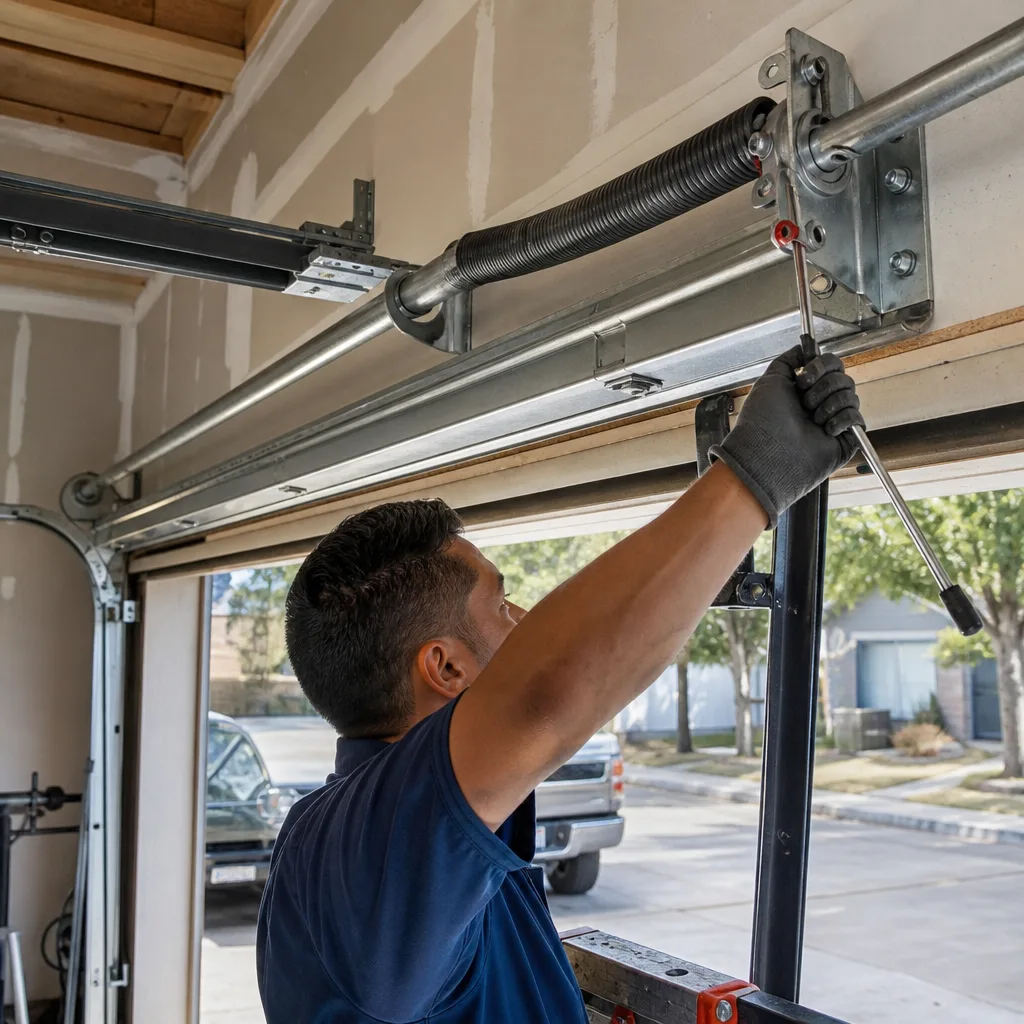
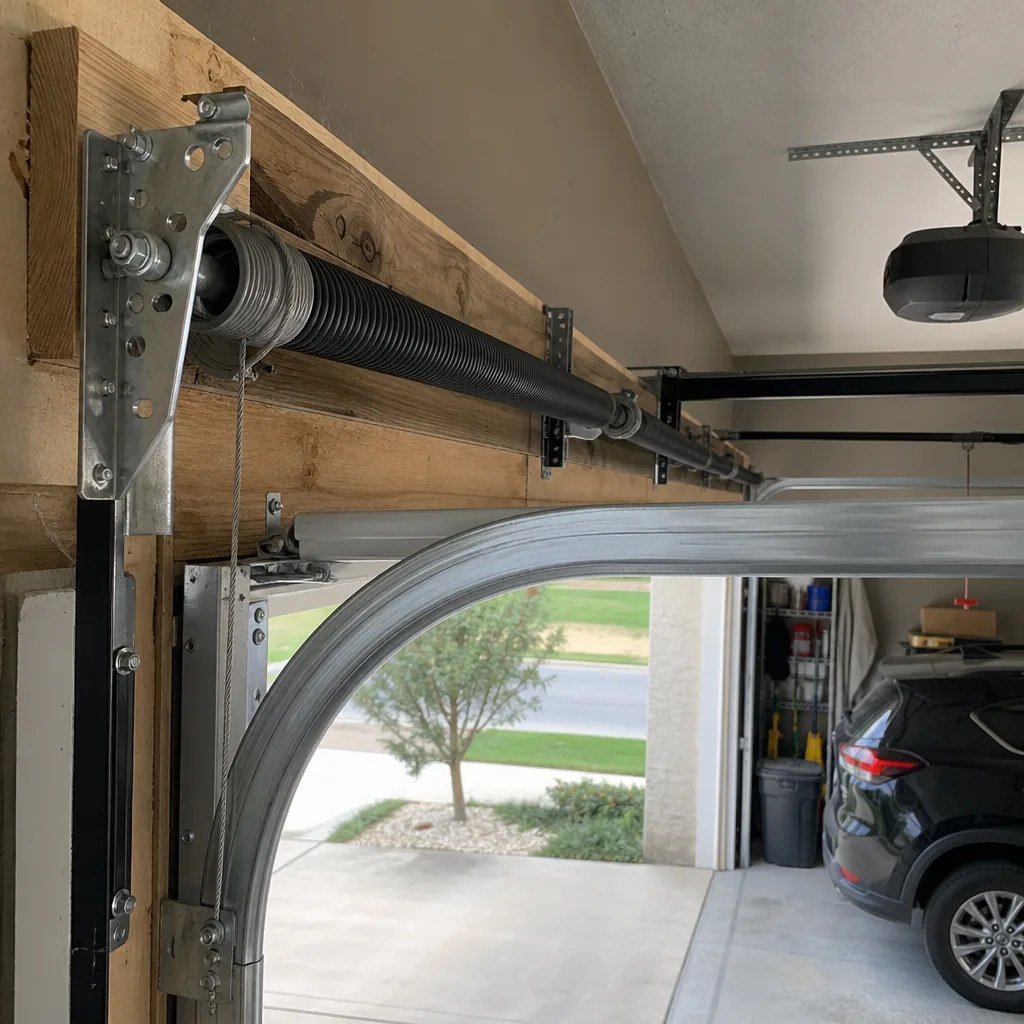
When the springs lose tension, the door feels heavy. You can hear the opener labor, see the door drift down an inch after stopping, or watch it jump as it moves. A rebalance involves adjusting the torsion spring, the heavy coil mounted above the door that handles most of the lifting weight, and checking the cable drums. Cost: $95 to $190 for the labor. This fixes a door that is otherwise sound but no longer lifting evenly.
2. A Panel Swap
If one section is dented, rotted, or cracked but the rest of the door is fine, swapping the panel is usually cheaper than replacing the door. This matters most for older doors where the new model no longer matches the old architecture. A bottom panel swapped on a standard 16-foot steel door runs $180 to $320 installed, depending on finish. Panel swaps make sense only when the door’s internal stiles and rails are still straight.
3. A Full Replacement
When the track gauge is obsolete, the door is 20-plus years old with a rusted bottom rail, or three sections are damaged, replacement beats repeated patching. Austin’s clay movement means any new door should be installed on new vertical track with adjustable brackets. Reusing 25-year-old track on a new door is false economy. Full replacement of a 16×7 steel door in Austin, including installation, typically ranges from $1,200 to $3,400 depending on insulation and window count; see our Garage Door Cost Breakdown: The Austin Homeowner’s Reference for 2026 for a detailed price analysis. We’ve replaced doors in Allandale, Crestview, and Circle C where the old track was a half-inch out and the customer had been told for years that the motor was weak.
How to Read a Kingswell Guarantee Price Sheet
The Kingswell standard, which Bramwell Garage Doors Austin follows on every job, rests on four written commitments: a written price before any work starts, a real arrival window, a clean job site, and a written guarantee on every repair. The price sheet is the part homeowners most often skim. Do not skim it.
- Verify the line items. A proper sheet separates parts, labor, and service fee. If the quote is one lump sum, ask for it broken out. You are entitled to know what a spring costs versus the labor to wind it.
- Look for the guarantee period next to each part. Springs, for example, carry a cycle rating, 10,000 cycles or 20,000 cycles, and the invoice should state the rating. A door that cycles four times a day takes about seven years to hit 10,000 cycles. The guarantee period should be printed, not spoken.
- Confirm the written arrival window. A real window is a two-hour block, not “sometime after 9.” The sheet or the work order should show it. If a dispatcher cannot tell you the window before the truck rolls, that is a red flag.
- Check that the total box is final. The number at the bottom should match the number the technician said out loud. If anything changes after the door is opened up, a new written price must come before the new work starts.
- Ask what the 365-Day Done Right Promise covers. If the repair fails within the guarantee period, Bramwell comes back and fixes it at no charge. The promise is in writing, not just said at the door. Request that document specifically.
Read the sheet as a contract, not a formality. The Kingswell Way is five values on every job: say the price before the work, show up in the window, leave the place cleaner than we found it, put the guarantee in writing, come back if it fails. A company that hands you a vague invoice is not following that standard.
Austin Permit Thresholds for Garage Door Work
Austin requires permits for structural work, but a standard garage door swap does not trigger one; for full details, read Garage Door Permits, Codes & Inspections in TX: What You Need to Know. Replacing a door in the existing opening, reusing the existing header and track mounts, falls under repair and replacement, not new construction. That holds true in Travis County and the city of Austin alike.
The threshold changes in three situations. First, if you are widening the opening, moving the header, or changing the door from a standard height to a taller door, that is structural and requires an engineered plan and a permit. Second, if the garage is attached to the house and you are altering firewall-rated doors or the separation between garage and living space, you need to keep the fire rating intact, which may require a specific door grade. Third, in some HOA-governed communities like Steiner Ranch, Avery Ranch, or Circle C, the HOA has its own design review even when the city does not. A door style or color change may need HOA approval first.
Electric work on the opener is a different matter. Replacing a plug-in motor does not require an electric permit. Adding a new dedicated circuit for a higher-horsepower opener or moving the outlet location does. Most standard opener swaps are plug-and-play and fall outside permit requirements. When in doubt, ask the installer whether the job changes the building envelope. If it does, the city wants to see plans.
For the full scope of repair work and what falls under normal replacement, see Garage Door Repair in Austin.
Springs, Openers, and the Parts That Wear
Garage doors have four main components that fail in a predictable order, and Austin’s heat accelerates the timeline on all of them.
Torsion and Extension Springs
The torsion spring, the heavy coil mounted above the door, does most of the lifting. It is rated in cycles, not years. A 10,000-cycle spring lasts about seven years at four cycles a day. When a spring breaks, the door becomes dangerously heavy. It will not open with the motor, and a person trying to lift it manually risks injury. Never try to reset or replace a torsion spring yourself. The tension stored in a wound spring can release instantly. This is one of the few home repairs that a professional should always handle. Spring replacement in Austin typically runs $150 to $280, parts and labor included. For more detail, see Garage Door Spring Repair in Austin.
The Opener Motor
Openers fail in two ways. The motor can burn out, or the logic board can fry from heat. Attached garages in Austin often exceed 120 degrees in July, and a plastic-geared opener mounted near the ceiling soaks that heat all day. Openers from Genie and LiftMaster both suffer premature board failure in unventilated garages. A new opener with installation runs $350 to $650 depending on horsepower and whether the rail is solid or sectional. The motor is rarely the first thing to fail, despite being the first thing blamed.
Rollers, Cables, and Hinges
Nylon rollers wear quietly until the ball bearings seize. A seized roller then flat-spots against the track. Listen for a rhythmic clicking as the door rises. Cables fray where they wrap around the drum at the top of the track. A frayed cable is a warning sign, not a wait-and-see item. If a cable snaps while the spring is loaded, the door can drop unevenly. Hinges wear at the bottom section first, because that section takes the most side-to-side force when the door is transitioning from vertical to horizontal.
Weatherstripping and Seals
The bottom seal on an Austin garage door bakes brittle in two to three summers. A worn seal lets dust, drafts, and the occasional scorpion into the garage. Replacement runs $70 to $140. It is the cheapest repair on the door and the one most often ignored until the rubber has disintegrated completely.
What a Repair Visit Should Look Like
A repair call in Austin should follow a path that builds trust through actions, not adjectives. Here is the sequence, in order, that Bramwell Garage Doors Austin follows.
- You reach a live person. The phone is answered 24 hours a day, 7 days a week, including nights and weekends. No voicemail tree, no next-business-day callback. You describe the problem in your own words.
- A stated arrival window is set. You get a two-hour block before the technician leaves the shop. A uniformed, background-checked technician arrives in that window. You know exactly who is pulling into the driveway.
- The technician looks, then writes. The door gets a full inspection before any price is quoted. The written price includes parts, labor, and the service call. It is provided before any work starts, without exception.
- The work is done on site. For common repairs, springs, rollers, cables, opener swaps, limit switches, the parts are on the truck. The job is completed in one visit in most cases.
- The guarantee is handed to you in writing. The 365-Day Done Right Promise states that if the covered repair fails within a year, Bramwell returns and fixes it at no charge. The Kingswell Guarantee document says exactly what is covered and for how long.
- The job site is cleaned. The technician leaves the garage floor the way it should have been before the door broke.
What this process eliminates is the door-step price change. Under the Kingswell standard, the number on the invoice matches the number the customer heard before the work began. If something unexpected is discovered, a new written price is presented before that additional work starts. That is the difference between a contractor and a company running on written standards.
For new doors and full system installs, see Garage Door Installation in Austin.
Common Mistakes to Avoid
- Replacing the opener before checking the track. Austin’s slab movement often knocks tracks out of square. A new motor on a binding track fails within a year. Check the track alignment first.
- Buying an uninsulated door for an attached garage. The garage shares a wall with the house. An uninsulated steel door turns that wall into a radiator. Austin’s summers make insulation a structural comfort decision, not an upgrade.
- Choosing a wood door on a west-facing elevation. Cedar and oak look right in hill country homes, but a west-facing wall in Lakeway or Spicewood gets punishing afternoon sun. Without a two-year re-sealing cycle, the panels will cup.
- Attempting a torsion spring replacement without a professional. The stored tension in a wound spring can release with enough force to cause serious injury. This is not a DIY job.
- Ignoring a frayed cable. A frayed cable means the door’s counterbalance system is compromised. It can snap under load and drop the door.
- Accepting a verbal quote. A quote spoken but not written is not a quote. Get the price, the guarantee term, and the arrival window on paper before work begins.
- Leaving the bottom seal for another season. A cracked seal lets dust and pests into the garage. It is the cheapest repair on the door and the easiest to put off.
When to Call a Professional
Call a professional when the door will not open at all, when a spring has snapped, when the door sits visibly crooked in the opening, when you hear a loud bang from the garage, or when the door reverses on its own while closing. Any of those indicates a safety system or counterbalance failure. A door weighing 150 to 250 pounds is not something to muscle open by hand, especially when the spring has already failed. If the door is groaning, rubbing, or shaking on the way up, call before the track pulls away from the wall. Bramwell Garage Doors Austin offers free estimates in Austin and the surrounding communities, call (325) 246-2936. A technician will inspect the door, hand you a written price, and explain, in plain language, what actually failed and what fix is appropriate.
See the difference
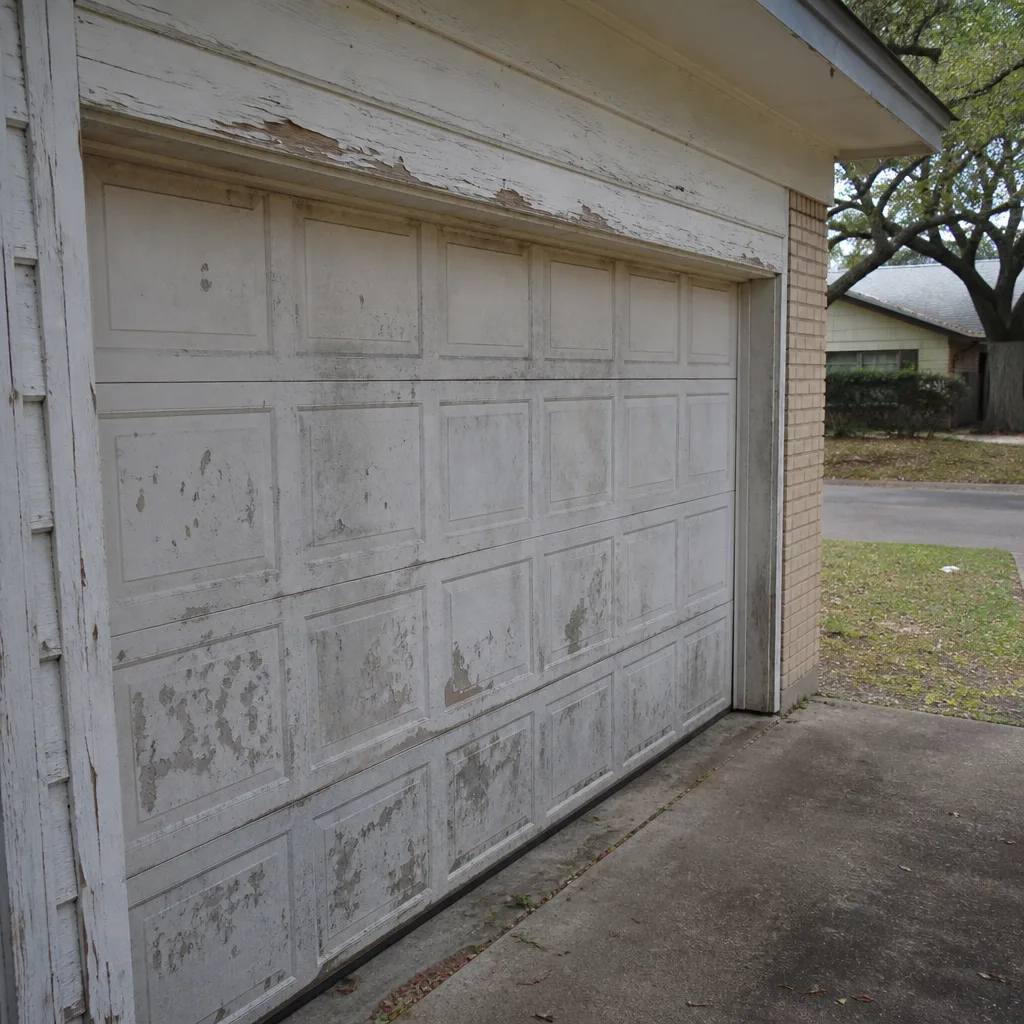 Before
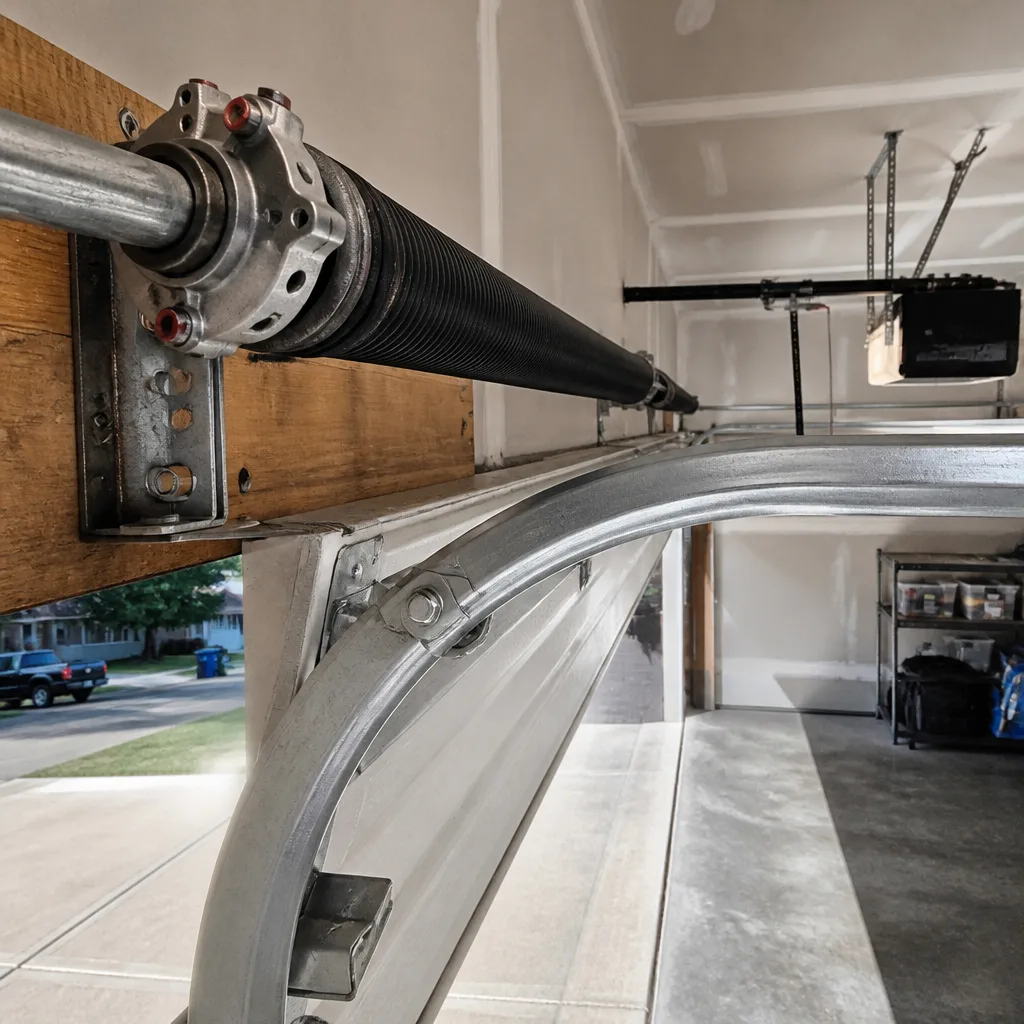 After
After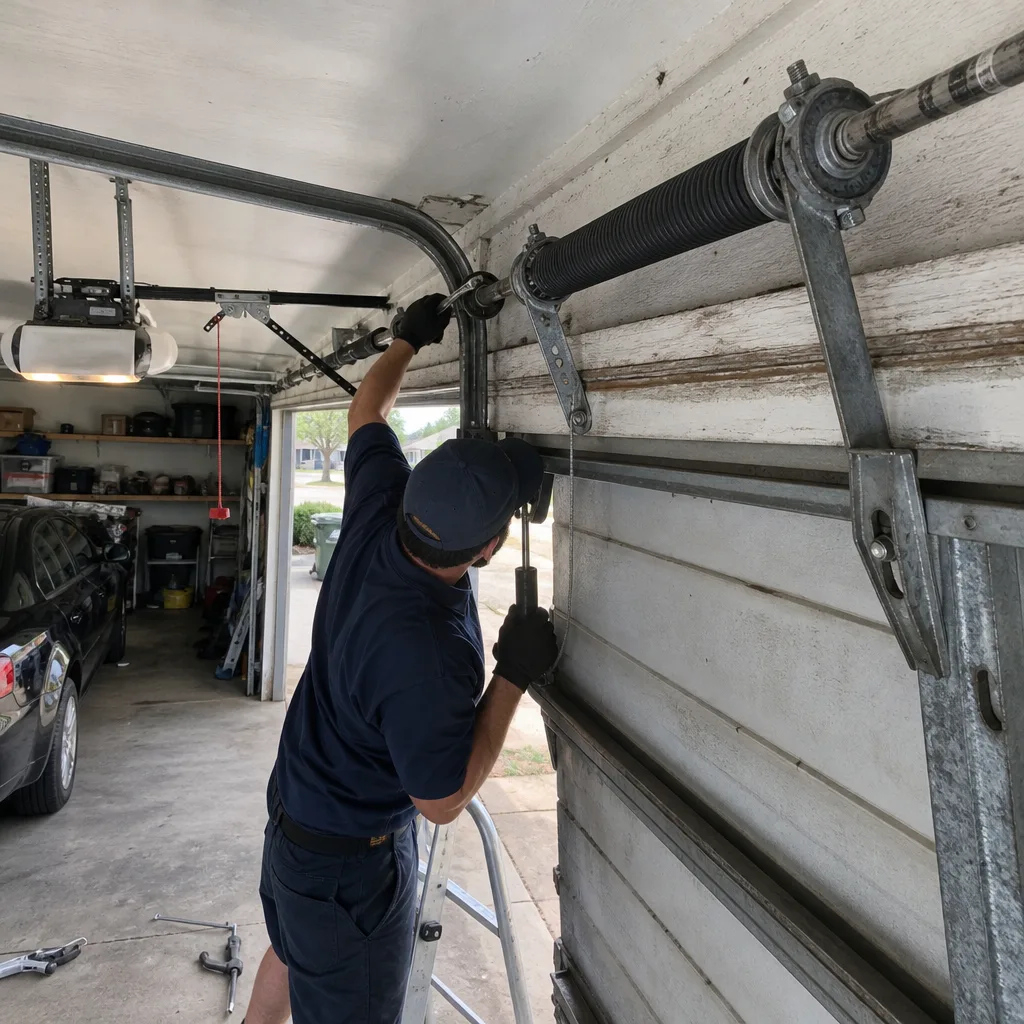 Before
 After
After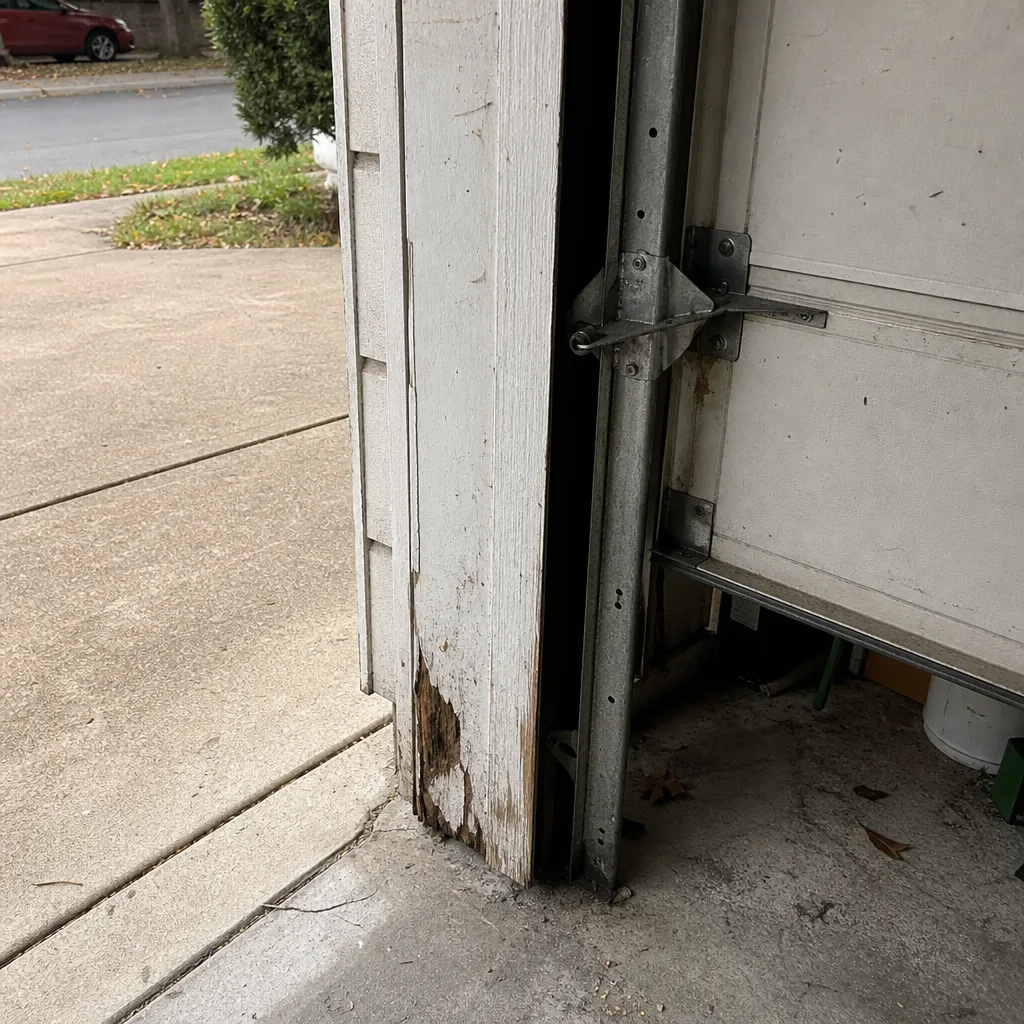 Before
 After
AfterFrequently Asked Questions
Most torsion-spring replacements in Austin run $150 to $280, parts and labor included. The exact price depends on the spring’s cycle rating, wire gauge, and whether both springs need replacing. At Bramwell Garage Doors Austin, the written price comes before any work starts, and the spring is covered by the 365-Day Done Right Promise. Call (325) 246-2936 for a free estimate.
Yes. Most common repairs, including spring replacement, roller replacement, cable repair, and opener swaps, are completed in one visit because the parts are carried on the truck. Bramwell Garage Doors Austin answers calls 24/7 with a live person and sets a stated arrival window before the technician heads out. Same-day service is available in most parts of Austin, including Round Rock, Cedar Park, and Pflugerville.
No, not for a standard door swap in the existing opening. A standard replacement that reuses the header and track mounts falls outside the city permit requirement. A permit becomes necessary only if the opening is being widened, the header is moving, or the fire-rated separation between garage and house is altered. Homeowners in HOA-governed communities like Avery Ranch or Steiner Ranch may also need design review approval.
Shaking is usually a balance problem. Either the springs have lost tension, a roller has flat-spotted, or the track is out of square due to slab movement. Austin’s expansive clay soil frequently shifts the concrete under the track, which binds the door on one side. A professional can diagnose whether the fix is a rebalance, a roller swap, or a track re-shim.
Not under the Kingswell standard. Bramwell Garage Doors Austin provides a written price before any work begins. If the technician finds an additional problem after the initial inspection, a new written price is presented before that work starts. The number on the invoice matches the number the customer heard. That commitment is in writing on every job.
A spring rated for 10,000 cycles lasts roughly seven years at four open-close cycles per day. Austin’s garage heat does not directly shorten spring life, but it does stress the opener’s circuit board and the bottom seal. The spring’s true lifespan is measured in cycles, not calendar years. A 20,000-cycle spring can last a decade or longer.
The Bottom Line
Austin’s garage doors fail in patterns that national guides miss. The clay soil shifts the slab, the slab knocks the track out of square, and the track binds the door. A homeowner replaces the motor, the problem persists, and the cycle repeats. The fix starts with understanding what actually failed. Match the material to the exposure, steel on a west-facing wall, low-E glass in a modern full-view door, and demand a written price before the work starts, a written guarantee after it ends, and a real arrival window in between. That is the Kingswell standard, and it is the only way to buy a garage door in Austin without inherited problems.
Written by Marcus Ellery, Owner at Bramwell Garage Doors Austin, serving Austin since 2001.